
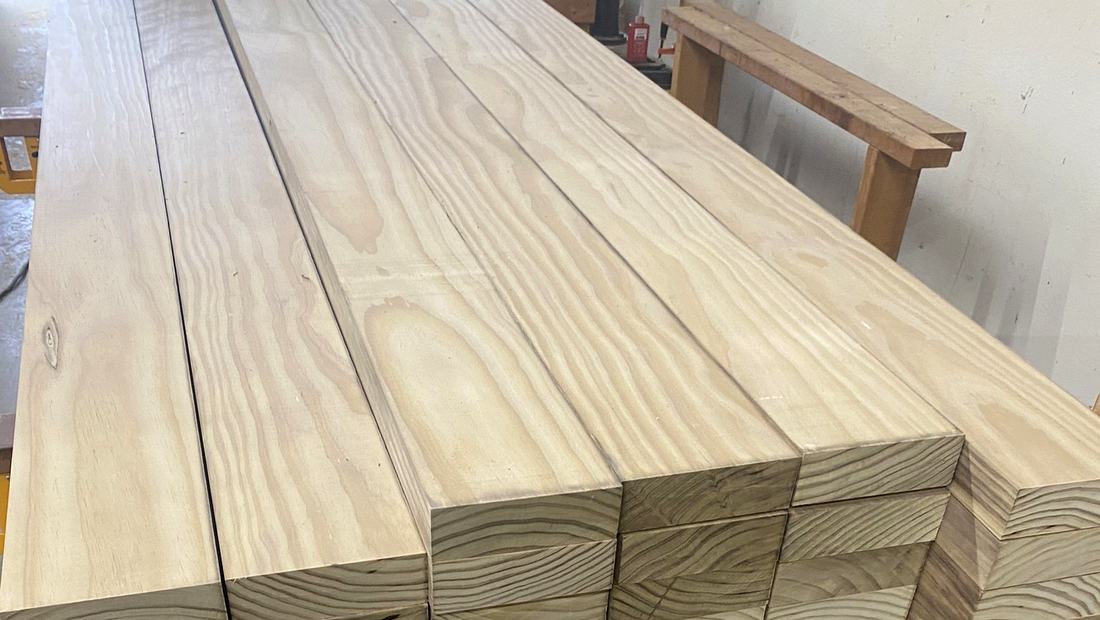
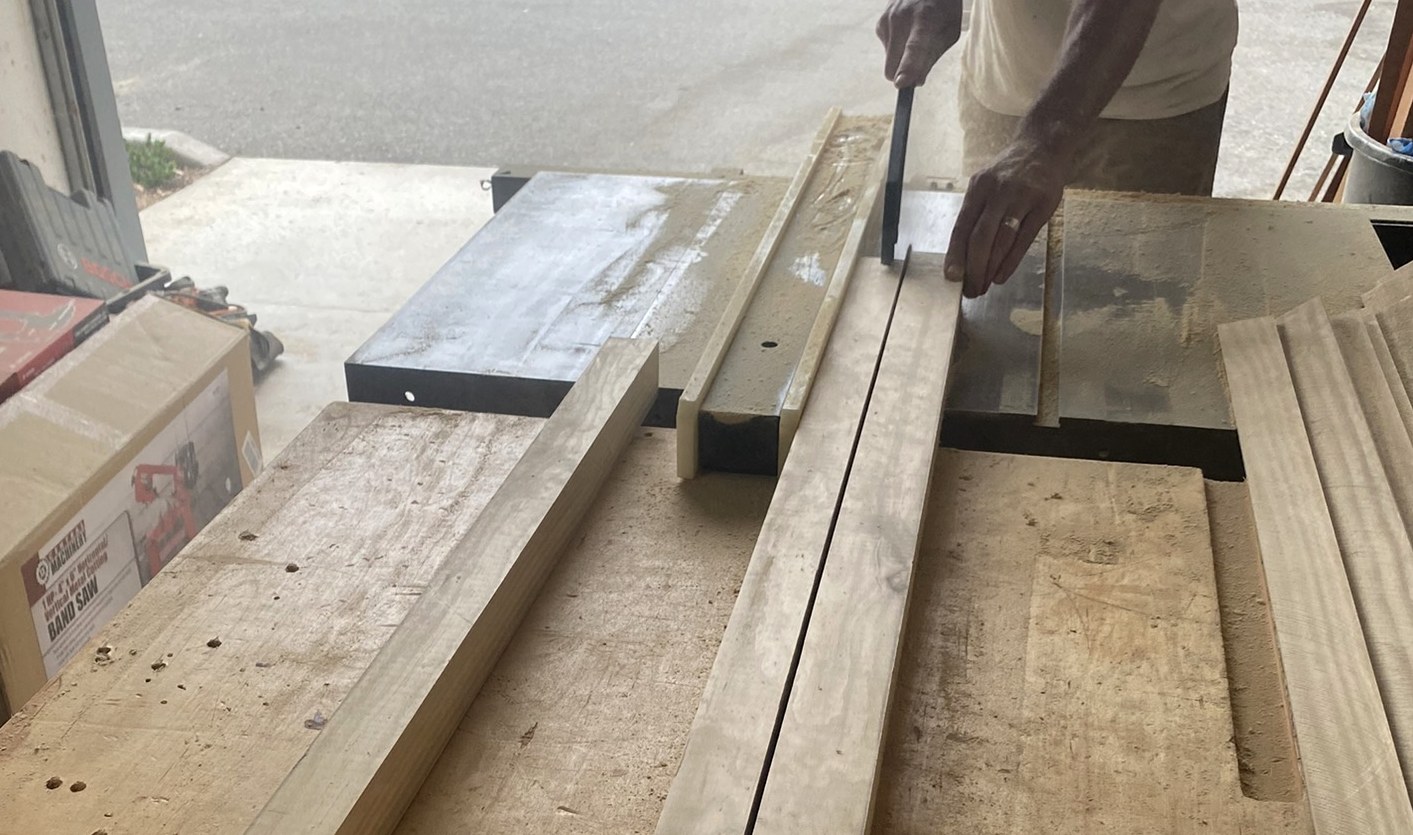
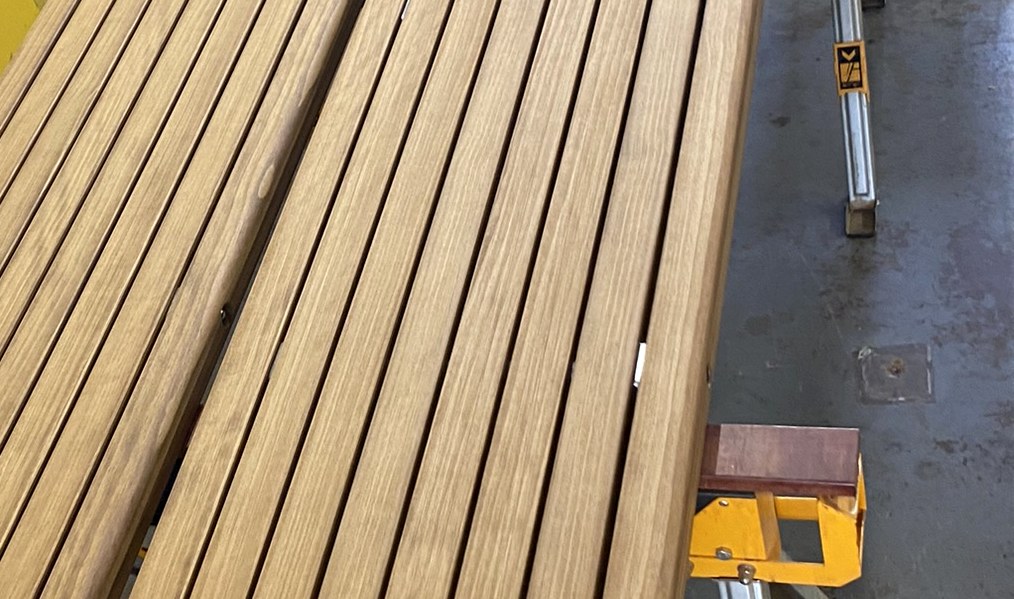
Cut a board of Accoya and the whole shop knows about it. It smells faintly of vinegar. At first, you may wonder if something is wrong with the wood.
Nothing is. The smell is part of what was done to it.
Accoya starts as radiata pine, a fast-growing softwood that is rarely the obvious choice for a bench expected to spend decades outdoors. It absorbs moisture, moves and, left untreated, eventually decays.
Traditionally, the answer was to choose a tropical hardwood instead. But nearly a century ago, scientists began exploring another possibility: could they change the way the wood itself responded to water?
The answer was acetylation. The boards are treated with acetic anhydride, a close relative of the acid that gives vinegar its sour smell.
In simple terms, the process changes the parts of the wood that absorb water. With less water getting in, the wood is less likely to swell and shrink. For a bench, that stability matters: fewer dimensional changes mean cleaner joints, more consistent spacing and boards that are less inclined to distort as the seasons change.
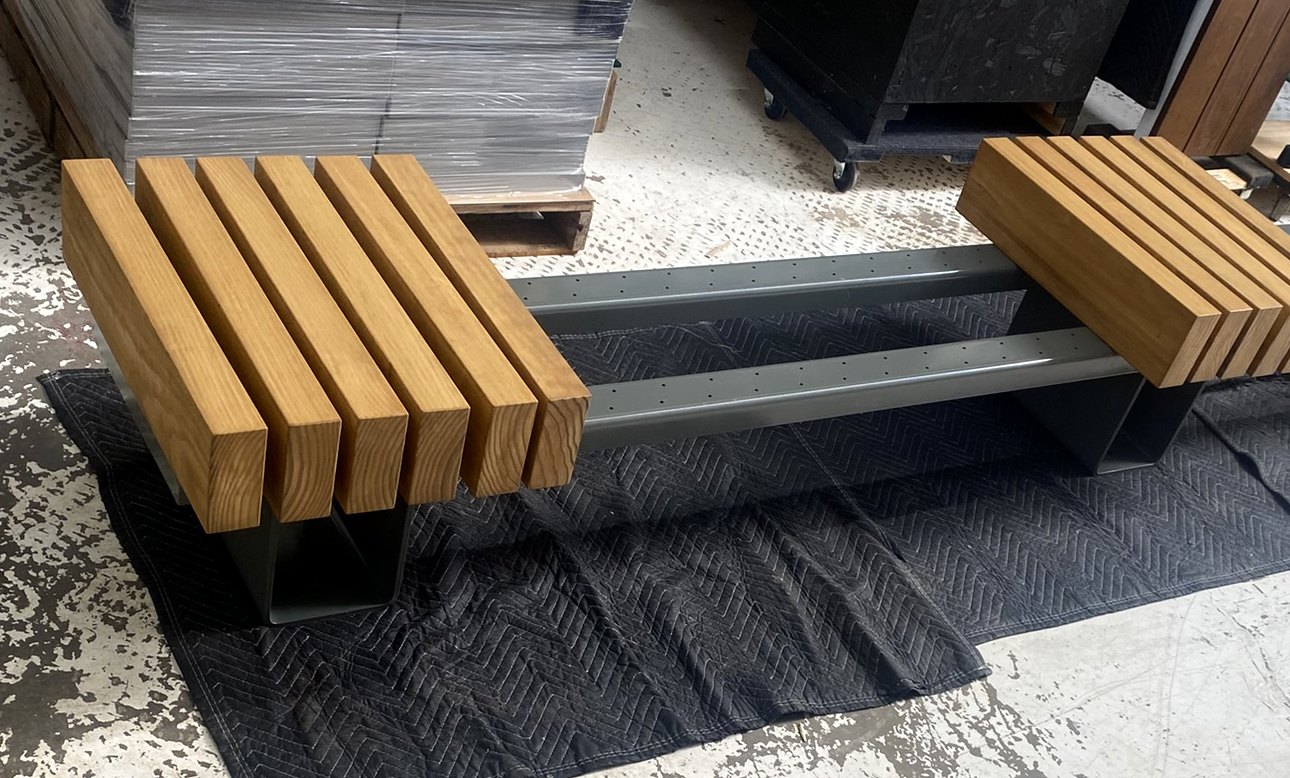
Left: raw, on the saw. Right: the same wood, finished.
Discovering the process was one thing. Producing acetylated wood reliably and at scale was more difficult. Commercial production began in 2007 in the Netherlands. Those early boards are now approaching twenty years outdoors. Not ancient by timber standards, but long enough to move the story beyond the laboratory.
What is unusual is that after all that chemistry, Accoya still looks and works like wood. It can be shaped using familiar tools, holds a clean edge, and retains its grain and tone.
At DM Braun, we work with many woods, but Accoya is quickly becoming one of our favorites, vinegar smell and all.
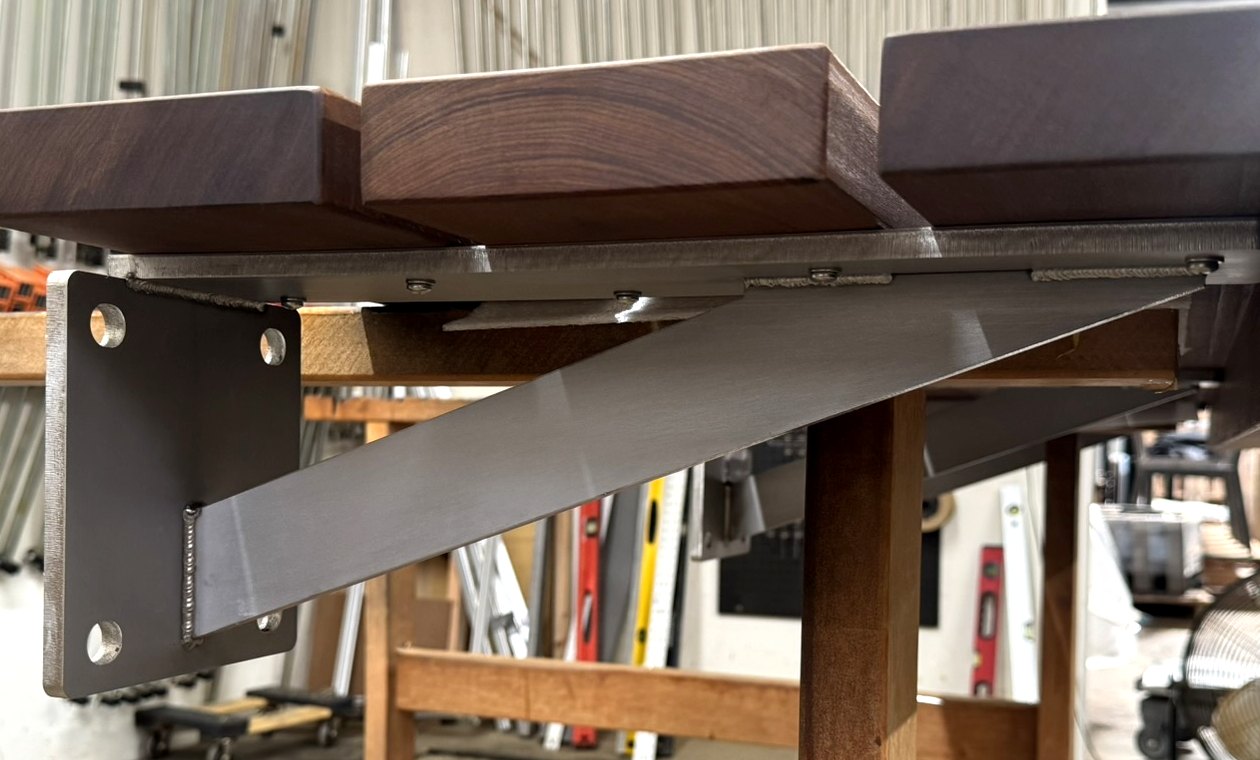
Two BraunMark Cantilever Wall benches can leave the shop in the same week with nothing in common on top. Different wood, different board pattern, different edge, different length. But turn them over, and you find the same frame.
On a custom bench it is drawn from scratch which adds time and cost on the project.
Left: under a Cantilever Wall seat. Right: Ground Mounted frame.
On a BraunMark bench, that half is already done. Every bench type, every frame and every anchoring condition is documented before your project starts, so the structure reaches your drawing set resolved on the first submittal.
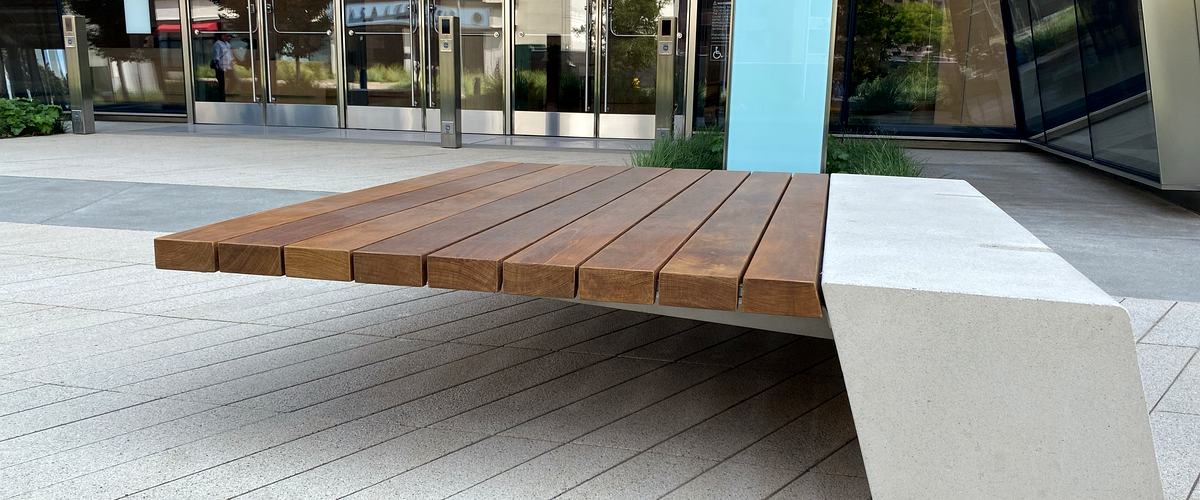
The BraunMark system begins with three structural frames for different site conditions: Seatwall, Cantilever Wall and Ground Mounted. Once the appropriate frame is selected for the site, everything above the frame is yours to design. The same frame may carry a long run of wide Ipe boards or a custom length Kebony bench with a stringer style board pattern on another.
The BraunMark Product & Specification Guide covers:
Enough to name a bench in a schedule at SD, and fill in the specifics at CD. Download the Spec Guide ›
Bench Notes comes out on the second Tuesday of every month, straight from the shop.